Whoever approached Hierapolis from the north in antiquity met its citizens before its walls — the dead ones. Tombs crowd both sides of the old road for a remarkable distance: burial mounds, carved stone chests, little funerary houses with doors and gables. Time has been unusually gentle here, and the necropolis of Hierapolis now counts among the best-preserved ancient cemeteries in Anatolia.
There is an apparent contradiction in a famous healing resort keeping a cemetery the size of a district, and resolving it is half the pleasure of the walk. The other half is the atmosphere — pale stone, open sky, the plain below. On the day tour up from the Antalya coast the necropolis frames your arrival at the ancient city; the €50 day includes the guide and three meals, with entrance tickets paid at the official gates.
Why a City of Healing Buried So Many
The answer sits in the water. Hierapolis sold hope: thermal springs with a reputation strong enough to pull the sick across the ancient world. Some of those visitors recovered and went home to tell the story. Others did not — and many, knowing how their journey was likely to end, chose to spend their last seasons in the spa anyway, close to the baths, the physicians and the gods. A city that receives generations of ailing pilgrims buries generations of them too.
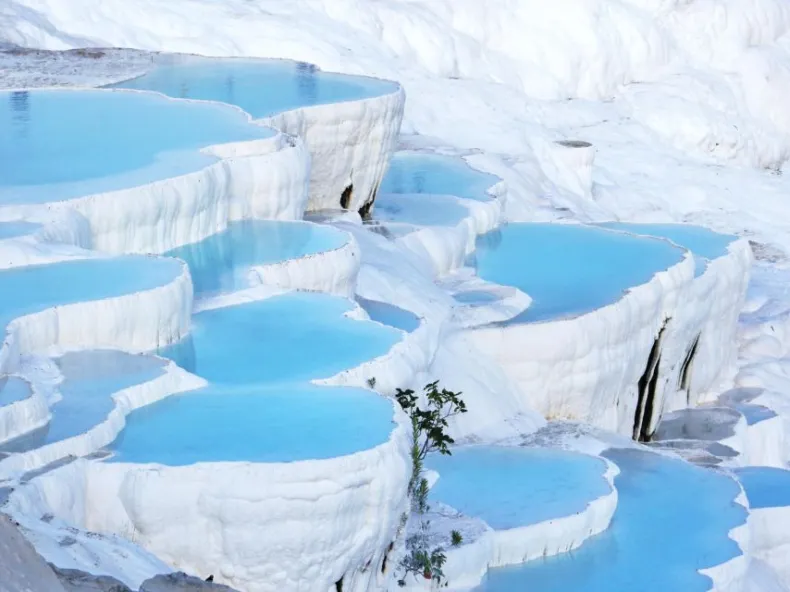
Add the ordinary dead of a prosperous town over many centuries of Greek, Roman and later life, and the arithmetic explains the landscape. The same warm water people still swim in at the Cleopatra Pool was the promise that filled these graves — and the industry that paid for their marble.
Mounds, Marble Chests and Little Stone Houses
The cemetery reads like a catalogue of ancient burial fashion. Oldest in feel are the tumuli — round mounds ringed with masonry, each covering a vaulted chamber. Around and after them come the sarcophagi: heavy carved chests, many hoisted onto pedestals or even onto the roofs of other tombs, as if height were the last luxury worth buying. And everywhere stand the house tombs — small stone buildings with doorways, benches and gabled roofs, arranged in rows like a village that stopped moving.
Inscriptions carry the human detail: names, families, trades, warnings against reusing the grave. Reading them — your guide translates the good ones — turns monuments back into neighbours.
The Atmosphere of the Walk
For a burial ground, the necropolis is a strangely light-hearted place to wander. It is open and sunlit, the stone is honey-and-bone coloured, lizards patrol the sarcophagus lids, and the view runs down over the plain that ancient travellers crossed to get here. Nothing about it feels morbid; it feels like an abandoned town whose inhabitants happen to be underground.
Walk it slowly, let the group thin out, and give the carved doors a close look before the road pulls you on toward the gates and colonnades of Hierapolis itself. Early and late light are kindest to the pale stone if photographs matter to you.
Visiting the Necropolis on the Tour
This is a corner of Pamukkale where a licensed guide earns their keep — tomb types, inscriptions and burial customs need a translator, and ours provides one on the full-day Pamukkale tour from Antalya. The price stays a flat €50 per person with breakfast, lunch and dinner built into the day; site tickets are never bundled in, because the official gate tariff changes and you should pay exactly that — the ticket logic is spelled out here. Online reservation is free, and payment happens on tour day.